10 Free Crochet Christmas Stocking Patterns for Beginners
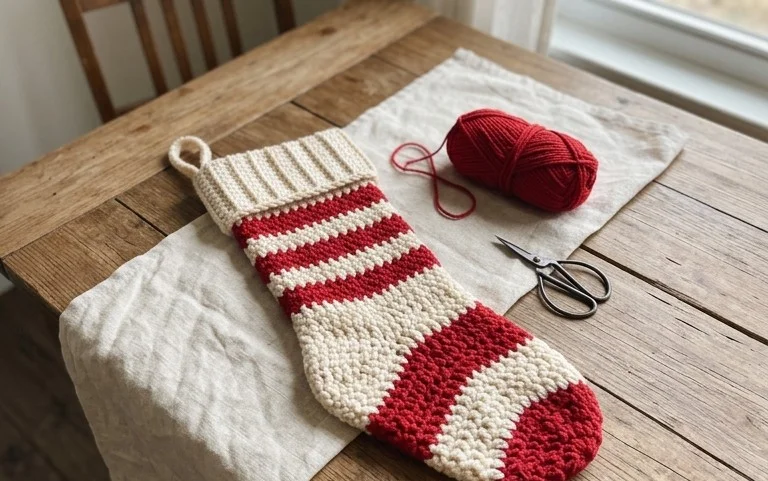
Handmade wool stockings hanging by the fireplace add a distinct weight and warmth to a room that store-bought versions simply lack. These projects feature chunky textures and classic cables that provide a cozy focal point for your holiday mantle. Whether you want to practice your color changes or need a durable heirloom that holds heavy candy and gifts, these designs suit makers of all levels. You will learn to manage increasing rounds for the heel and shaping the toe, which creates a clean finish. Working with natural wool ensures your decorations last for many years of heavy use.
Why You’ll Love This Pattern
This beginner-friendly crochet coaster pattern provides an excellent introduction to working in the round. You will master the basics of building a flat circle using simple single crochet stitches, which makes this an ideal project for practicing consistent tension. Because these coasters work up quickly in about 30 minutes, they serve as a practical way to use up leftover cotton yarn from larger projects. The dense texture created by the small hook and medium weight yarn ensures that the finished item absorbs moisture effectively, protecting your tabletops from condensation.
I managed to finish a set of four in a single afternoon, and they look professional enough to give as housewarming gifts to my entire family.
— Sarah, hobbyist crocheter
Pattern Overview & Skill Level
- Skill Level: Beginner
- Approximate Time: 30 minutes per coaster
- Construction: Working in continuous rounds, starting from a magic ring
- Finished Dimensions: Approximately 4 inches in diameter
Materials & Supplies Needed
- Yarn: Worsted weight (#4) 100% cotton yarn, approximately 15 yards per coaster. Cotton is the preferred fiber because it is heat-resistant and absorbent.
- Hook Size: 4.0 mm / G-6. This smaller hook size helps create a tight fabric that will not stretch out of shape.
- Notions: Tapestry needle for weaving in ends, a locking stitch marker to track the start of rounds, and scissors.
- Safe yarn substitutions: You may use a bamboo-cotton blend for a softer feel, though this may result in a slightly more fluid drape rather than a firm circle. Avoid acrylic yarns as they do not absorb moisture well and may melt if exposed to hot mugs.
Stitch Guide & Abbreviations (US Terms)
- MR: Magic Ring. A method of starting rounds by working stitches into an adjustable loop.
- ch: Chain stitch.
- sc: Single crochet. Insert hook into stitch, yarn over, pull up a loop, yarn over, pull through both loops on hook.
- inc: Increase. Work 2 sc into the same stitch to add volume to the round.
- st/sts: Stitch/stitches.
- sl st: Slip stitch. Used to finish the round by pulling the yarn through the final loop on the hook.
Step-by-Step Pattern Instructions
Coaster Body
- Rnd 1: Start with a MR. Work 6 sc into the ring. Pull the tail tight to close the center hole. (6 sts)
- Rnd 2: Work 2 sc in each sc around. Place a stitch marker in the first stitch to keep track of the round start. (12 sts)
- Rnd 3: *1 sc in next st, inc in next st; repeat from * around. (18 sts)
- Rnd 4: *1 sc in next 2 sts, inc in next st; repeat from * around. (24 sts)
- Rnd 5: *1 sc in next 3 sts, inc in next st; repeat from * around. (30 sts)
- Rnd 6: *1 sc in next 4 sts, inc in next st; repeat from * around. (36 sts)
Finishing
Once you reach the end of round 6, do not chain. Remove the stitch marker and perform one sl st into the next stitch to level off the edge. Cut the yarn, leaving a 6-inch tail. Pull the tail through the final loop and tighten. Use your tapestry needle to weave the yarn tail through the back loops of the final round to secure it. Trim any excess yarn close to the fabric.
Care & Washing Instructions
- Machine wash on a gentle cycle in cold water using a mild detergent to preserve the cotton fibers.
- Lay the coaster flat on a towel to air dry, ensuring it is shaped into a perfect circle while damp.
- Avoid using bleach or fabric softeners, as these can break down the cotton fibers and reduce the natural absorbency of the coaster.
Pro Tips & Common Mistakes to Avoid
Maintaining consistent tension is the most important factor for a flat circle. If your coaster begins to cup or bowl, your stitches are likely too tight; try relaxing your grip on the yarn or switching to a slightly larger hook. Always use a stitch marker at the beginning of each round, as working in a continuous spiral makes it easy to lose your place. When weaving in your ends, run the needle through the stitches in multiple directions to prevent the tail from poking out after washing. If you wish to make a larger coaster, continue the increase pattern by adding one additional single crochet between each increase in every subsequent round, but remember this will require extra yarn.
Frequently Asked Questions
Can I use a different weight of yarn for this pattern?
Using a different yarn weight will significantly change the finished size. A lighter yarn will result in a smaller coaster, while a bulkier yarn will produce a much larger mat. You may need to adjust your hook size accordingly to maintain a dense, hole-free fabric.
How do I keep the circle from curling?
Curling usually happens if your tension is too tight or your increases are placed incorrectly. Ensure you are working two stitches into the increase point of the previous row. Blocking the finished item by pinning it flat while slightly damp can also help correct minor cupping.
Is it okay to sell coasters made from this pattern?
You are welcome to sell physical items made using this pattern as long as you credit the designer. Please note that you cannot redistribute or sell the digital pattern itself.
What is the best way to make the magic ring secure?
After you have worked the initial stitches into your magic ring, pull the tail firmly to close the center hole. After finishing the coaster, weave the tail back and forth through the base of the center stitches several times before trimming to ensure the ring does not loosen over time.
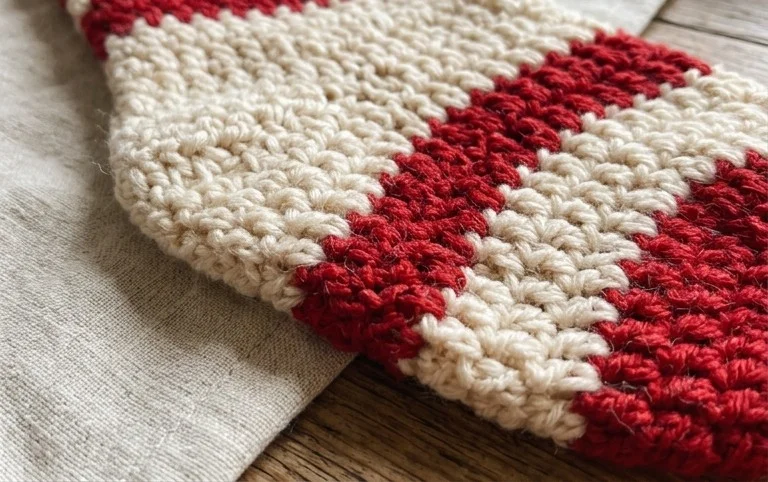
A finished holiday stocking brings a personal sense of history to your home that friends and family will notice immediately. You can switch to a bulky velvet yarn if you want a softer, modern feel for your living room mantle. Post a photo of your completed work on Instagram or Pinterest so other crafters see your unique color choices. If you want to keep your hooks moving throughout the season, check the rest of our blog for more seasonal projects and basic stitch tutorials.