Easy Snowflake Granny Square Blanket Free Crochet Pattern
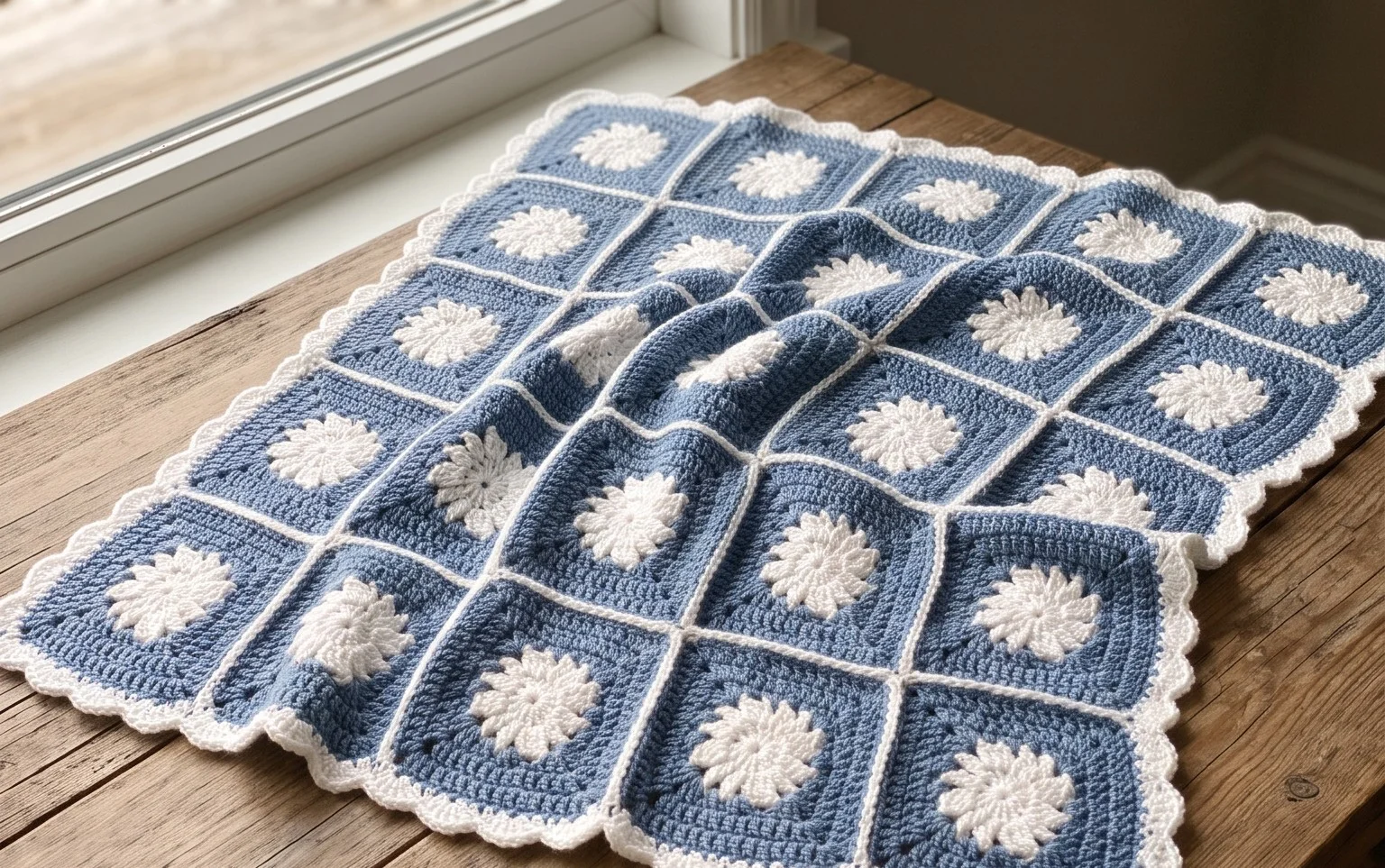
White snowflakes set against a wintery background give this granny square blanket a crisp, cozy look, while the joined squares make a soft layer for the sofa or bed. It suits crocheters who enjoy a clear repeating motif, including beginners ready to practice granny clusters and color changes. The finished blanket also makes a thoughtful handmade gift for a winter birthday or a new home. As you work, you’ll see how a snowflake motif takes shape from simple stitches, then learn how individual squares can be joined into a larger piece. The steady rhythm makes it satisfying to crochet a few squares at a time, and you can adjust the blanket’s size by adding more motifs. Choose shades that fit your room, or keep the contrast traditional with white snowflakes on blue.
Why You’ll Love This Pattern
A firm cotton fabric and a simple single crochet stitch make this square dishcloth useful for everyday washing and wiping. The pattern uses one stitch throughout, so you can focus on keeping your edges straight rather than learning a complicated repeat.
The 25-stitch width is easy to count, and the square shape makes this a handy project for practicing even tension. One ball of cotton yarn is usually enough, and the finished cloth is a practical housewarming gift that can go straight into the kitchen drawer.
The plain rows are also easy to pause and pick up again. If you want to make a small stack, the repeated instructions stay the same for every cloth.
I made mine over two evenings, and the rows were simple to keep track of. The cotton feels sturdy after washing.
— Maria, home crocheter
Pattern Overview & Skill Level
- Skill Level: Beginner. You need to make a foundation chain and single crochet stitches.
- Approximate Time: About 2–3 hours, depending on your pace and how often you stop to check your stitch count.
- Construction: Crochet a flat square in back-and-forth rows, turning at the end of each row. The cloth has no separate border or sewn seams.
- Finished Dimensions & Sizing: About 8 × 8 in (20 × 20 cm) after washing and drying flat. Individual results vary with yarn, hook, and tension.
Materials & Supplies Needed
- Yarn: About 100 yd (91 m) of worsted-weight (#4) 100% cotton yarn in one color. Cotton absorbs water and tolerates frequent washing. A small amount of a second color is optional, but this pattern does not include a color-change sequence.
- Hook Size: 5.0 mm / H-8 crochet hook. Use the hook that gives you a firm fabric without making the stitches difficult to work.
- Notions: Tapestry needle for weaving in the two yarn ends, scissors, and a ruler or tape measure. A stitch marker can help you identify the first stitch of a row, but it is optional.
- Substitutions: A similar-weight cotton or cotton-blend yarn can work. Acrylic is less absorbent and may feel different when wet. A thinner yarn or smaller hook makes a smaller cloth; thicker yarn or a larger hook makes a larger, looser cloth and uses more yarn.
Gauge: About 16 single crochet stitches and 18 rows measure 4 in (10 cm) in the finished fabric. Crochet a small test swatch if you want to check the finished size before starting. If you have more stitches per 4 in, try a larger hook; if you have fewer, try a smaller hook.
Stitch Guide & Abbreviations (US Terms)
- ch: Chain. Yarn over and pull the yarn through the loop on your hook.
- sc: Single crochet. Insert the hook into the stitch, yarn over and pull up a loop, then yarn over and pull through both loops on the hook.
- st: Stitch.
- sts: Stitches.
- turn: Rotate the work so you can crochet back across the previous row.
For this pattern, work the first single crochet into the first stitch at the edge of each row. The turning chain is not counted as a stitch, which keeps the stitch count consistent.
Step-by-Step Pattern Instructions
Dishcloth
- Foundation: Make 26 chains. Keep the chain relaxed; a very tight foundation can pull the bottom edge inward.
- Row 1: Starting in the second chain from the hook, make 1 single crochet in each chain across. Turn. (25 sts)
- Row 2: Chain 1; this chain does not count as a stitch. Make 1 single crochet in each stitch across, including the last stitch at the edge. Turn. (25 sts)
- Rows 3–25: Repeat Row 2 for each row. Work 1 single crochet in every stitch across, chain 1, and turn. Each row has (25 sts).
- Finish: After Row 25, cut the yarn, leaving a tail long enough to weave in. Pull the tail through the loop on your hook to secure it. Use a tapestry needle to weave both yarn ends back and forth through several stitches on the wrong side, then trim the excess. Do not pull the ends so tightly that the edge puckers.
Count the stitches before turning if the edges look uneven. The last stitch can be easy to miss, especially at the end of a row. If the square measures noticeably longer than it is wide, check that you have worked all 25 rows and that your row height is close to gauge.
Care & Washing Instructions
- Wash cotton in cool or warm water, up to 40°C (104°F), with similar colors and a mild detergent.
- Reshape the cloth and dry it flat, or follow the yarn label if it gives different drying directions.
- After washing, smooth the edges and corners flat by hand; blocking is usually unnecessary for a dishcloth.
Pro Tips & Common Mistakes to Avoid
- Keep tension steady: Avoid pulling the working yarn tight after each stitch. A firm but flexible fabric will absorb water and bend easily around dishes.
- Count the edge stitches: Put a marker in the first stitch of a row if you tend to miss it. Check that every row has 25 stitches; accidentally skipping an edge stitch will make the cloth narrower.
- Hide ends securely: Weave each tail through several stitches in one direction, then change direction for a short stretch. This helps keep the ends in place through repeated washing.
- Adjust size with care: To make the cloth wider, add chains to the foundation and work one fewer single crochet than the number of chains. Add rows to make it longer. A bigger cloth uses more yarn, so allow extra yardage rather than assuming 100 yd will still be enough.
Frequently Asked Questions
Can I use a different yarn fiber?
Yes, but cotton is a good choice for an absorbent cloth that will be washed often. A cotton blend may have a softer feel, while acrylic is less absorbent. Check the yarn label for washing instructions, and expect a different texture or finished size if the yarn weight changes.
How can I make the dishcloth smaller or larger?
For a smaller square, begin with fewer chains and work fewer rows. For a larger one, add chains and rows while keeping the stitch count in each row equal to the number of foundation chains minus one. A larger cloth needs more yarn; changing hook size also changes the fabric and dimensions.
Is this pattern suitable for a first crochet project?
Yes. It uses only chains and single crochet stitches, with no increases, decreases, color changes, or seaming. Practice the stitch on a short swatch first if your edges tend to become wider or narrower as you work.
Can I sell dishcloths made from this pattern?
You can sell finished items if the pattern designer’s terms allow it. Check those terms before listing your work, and write your own product description rather than copying someone else’s pattern text or photographs.
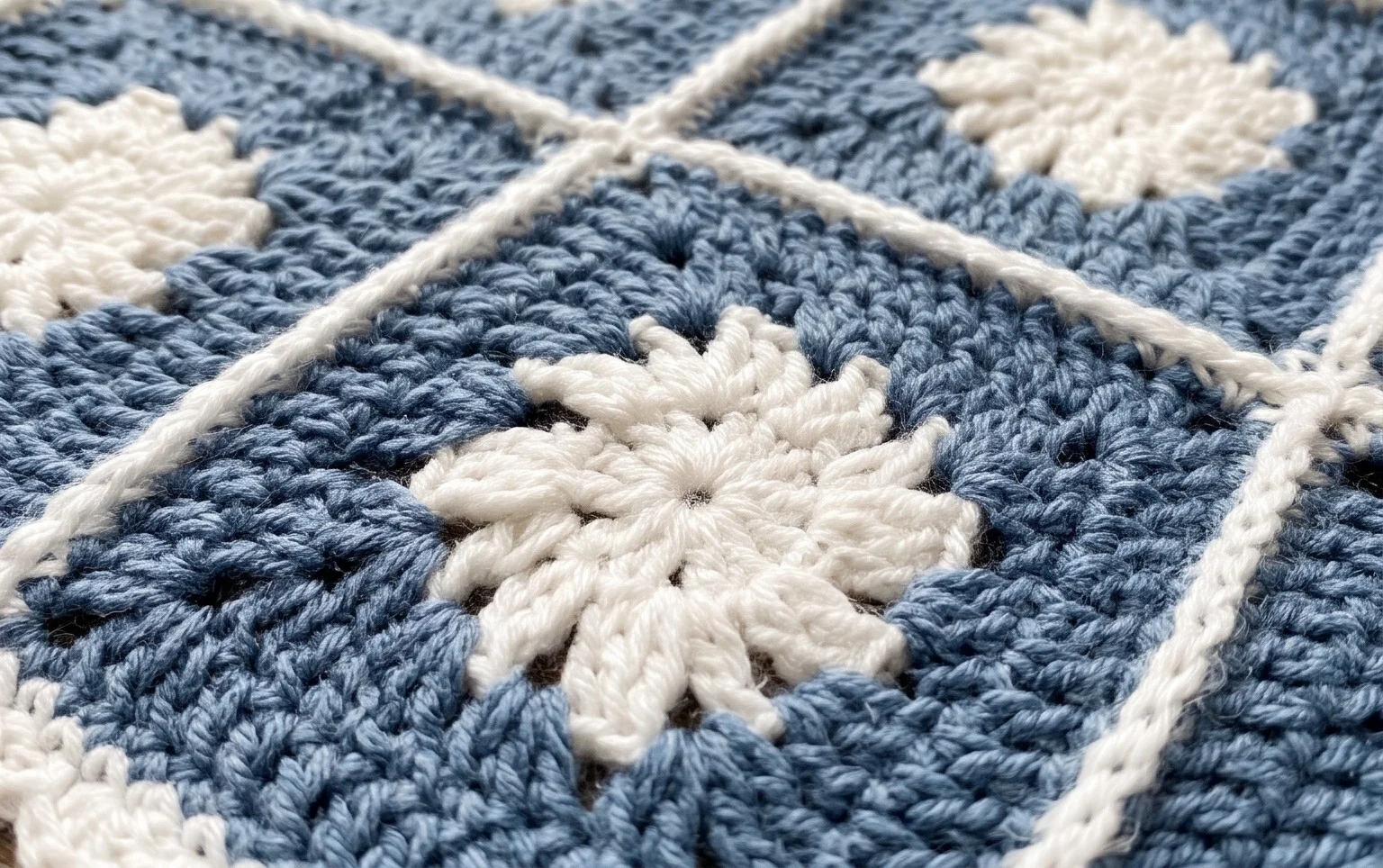
Once the last square is joined and the yarn ends are tucked away, you’ll have a soft blanket patterned with snowflakes that brings a little winter charm to a favorite chair or bed. For a simple variation, switch the background from blue to deep green, soft gray, or a color that suits the room. You can also add or remove rows of squares to change the finished size, keeping the motif consistent throughout. If you make one, share a photo on Pinterest or your favorite social media platform; seeing different color combinations is part of the fun. When you’re ready for another project, explore the other free crochet patterns on the blog for your next cozy make.