Add a Festive Touch with a Five-Point Crochet Star Ornament
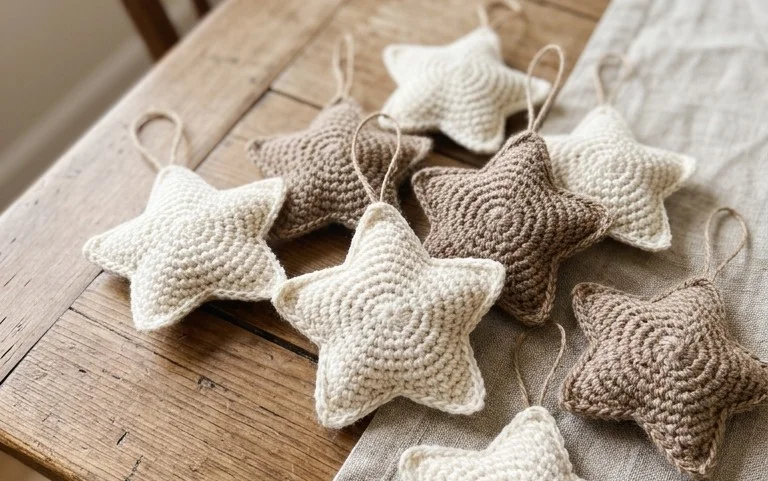
A little cotton star with five neat points adds a handmade touch to a Christmas tree, gift tag, or wreath. This ornament has a firm, textured finish that holds its shape, yet it is light enough to hang from a small loop of yarn or ribbon. Beginners can take it one section at a time, while gift makers can work up a handful in different colors for thoughtful, personal decorations. The pattern uses familiar crochet stitches and simple shaping to form the points, so you can focus on keeping your tension even as the star takes shape. You will find guidance for the key stitchwork, finishing the edges, and adding a hanging loop, along with practical tips for choosing yarn and adjusting the finished size. It is a satisfying project to make during a quiet evening, and each finished star is small enough to use up leftover yarn.
Why You’ll Love This Pattern
A square cotton dishcloth is a useful first project because its shape comes from straight rows rather than shaping or joining. The simple single crochet fabric is sturdy enough for everyday kitchen use, and the repeated row makes it easy to settle into a steady rhythm. One cloth takes about 2 to 3 hours, depending on your pace, and uses less than one skein of yarn. Cotton scraps can work well too, provided you have enough yarn to finish a row without changing colors mid-row.
The cloth measures about 8 inches square, a handy size for washing dishes or wiping counters. Its plain texture also makes it easy to spot missed stitches: the two sides should stay straight, with 30 stitches in every row.
The rows were easy to count, and the finished cloth feels firm without being stiff. I made it in an afternoon and use it at the sink every day.
— Maria, home crocheter
Pattern Overview & Skill Level
- Skill Level: Beginner. You need to know how to chain and single crochet.
- Approximate Time: 2 to 3 hours, including weaving in the ends.
- Construction: A flat square worked in turned rows from the bottom edge upward. Each row has 30 single crochet stitches.
- Finished Dimensions & Sizing: About 8 × 8 inches after washing and drying flat. Exact dimensions depend on your yarn, tension, and hook.
Materials & Supplies Needed
- Yarn: About 100 yards of worsted-weight (#4) 100% cotton yarn in one color. Cotton absorbs water and tolerates regular washing. A small amount of a second color is optional, but this pattern does not require stripes.
- Hook: 5.0 mm / H-8 crochet hook. Check your gauge before starting; use a smaller or larger hook if needed.
- Notions: Tapestry needle for weaving in ends, scissors, and a ruler or tape measure.
- Substitutions: Another worsted-weight cotton yarn can be used. Mercerized cotton usually makes a smoother, slightly less absorbent cloth; unmercerized cotton often feels softer and more absorbent. Avoid acrylic for a dishcloth, since it absorbs less water. A different yarn weight changes the finished size and may change the yardage needed.
Gauge: 14 single crochet stitches and 16 rows measure about 4 inches square in the pattern stitch. Gauge is a practical guide to the finished size, so make a small swatch if you want the cloth to match the stated dimensions closely. Adjust the hook size to meet gauge rather than changing the stitch count.
Stitch Guide & Abbreviations (US Terms)
- ch: Chain.
- sc: Single crochet. Insert the hook into the stitch, yarn over and pull up a loop, then yarn over and pull through both loops on the hook.
- st / sts: Stitch / stitches.
- rep: Repeat the stated instruction.
- turn: Rotate the work to begin the next row in the opposite direction.
The turning chain at the start of each row does not count as a stitch. Work the first single crochet into the first stitch of the row, not into the turning chain. This keeps the cloth at 30 stitches wide.
Step-by-Step Pattern Instructions
Dishcloth
- Foundation: Ch 31. This chain provides 30 working stitches plus one turning chain.
- Row 1: Sc in the second ch from the hook and in each ch across. Turn. (30 sts)
- Rows 2–30: Ch 1, sc in each st across, turn. At the end of Row 30, do not turn. (30 sts per row)
To keep the edges even, place the final single crochet of each row in the last stitch, not in the turning chain. Count each row before turning, especially during the first few rows. If the stitch count increases or decreases, undo the row to find the missed or extra stitch; correcting it early keeps the square from leaning.
Finishing
After Row 30, cut the yarn, leaving a tail of about 6 inches. Pull the tail through the loop on your hook to secure it. Thread the tail onto a tapestry needle and weave it back and forth through several stitches on the wrong side. Turn direction once while weaving so the end is less likely to work loose during washing. Weave in the starting tail the same way. Lay the cloth flat and check that the edges are straight before washing.
Care & Washing Instructions
- Wash cotton cloths in cool or warm water, up to 40°C (104°F), with similar colors; follow the yarn label if it gives different instructions.
- Dry flat or tumble dry on low heat if the yarn label allows it. Remove the cloth while slightly damp to limit shrinkage.
- Reshape the damp cloth into a square and let it finish drying flat. Blocking is optional; a light steam is unnecessary for a dishcloth.
Pro Tips & Common Mistakes to Avoid
- Keep your tension even but not tight. If the starting chain feels much firmer than the rows, use a slightly larger hook for the chain alone or make the chains more loosely.
- Count to 30 at the end of every row. A stitch marker in the first stitch of each row can help you find the edge stitch, especially if the turning chain blends into the fabric.
- Weave in ends securely on the wrong side by passing the needle through several stitches, then changing direction. Do not leave a short tail that can slip free in the wash.
- For a larger cloth, add an even number of chains and work the same number of single crochet stitches across. Each extra stitch adds width, and additional rows add height; allow more yarn in proportion to the larger area.
Frequently Asked Questions
Can I use a different kind of yarn?
Yes, but cotton is the best choice for a cloth used with water because it absorbs well and handles frequent washing. If you use a different fiber or yarn weight, the texture and finished dimensions will change. Check the yarn label for washing guidance.
How can I make the dishcloth smaller or larger?
For a smaller or wider cloth, change the foundation chain while keeping one fewer single crochet stitch than the chain count. For a taller cloth, work fewer or more rows than the 30 given here. Changing both width and height affects the finished size and the amount of yarn needed.
Is this pattern suitable for a first crochet project?
Yes. It uses only chains and single crochet stitches, with no increases, decreases, or seams. The main challenge is keeping 30 stitches in every row, so count the stitches before moving on.
Can I sell dishcloths made from this pattern?
You can sell finished items if the pattern designer’s terms allow it. Credit the designer when required, and do not claim the pattern itself as your own. No separate designer terms were supplied with this guide, so check the applicable terms before selling.
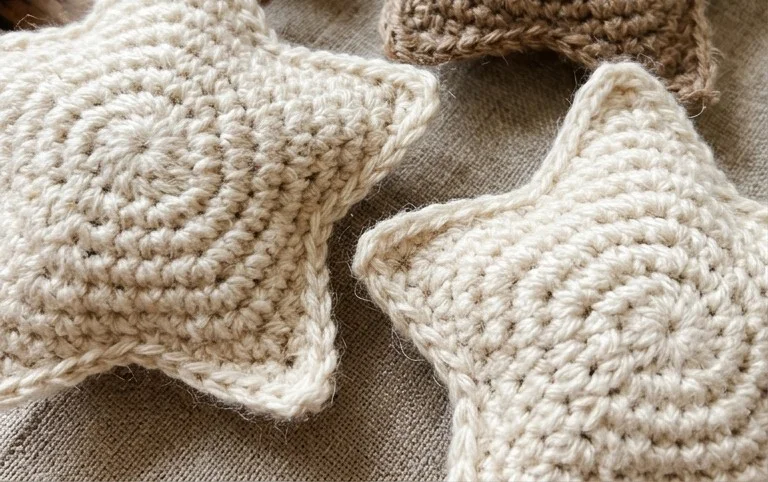
Your finished star is a small, personal decoration that can bring a handmade touch to the tree, a wrapped gift, or a holiday garland. For a simple variation, use a finer yarn and a smaller hook to make a daintier ornament, or choose a contrasting color for the hanging loop. Weaving in the ends neatly helps the points keep their shape, and a light blocking can flatten any curled edges before you hang it. If you make a set, try mixing two or three colors while keeping the same yarn weight so the stars stay close in size. Share a photo of your finished crochet star on Pinterest or your favorite social platform, and explore more free crochet patterns on the blog for your next handmade project.