Make a Little Star Cotton Dishcloth for Everyday Use
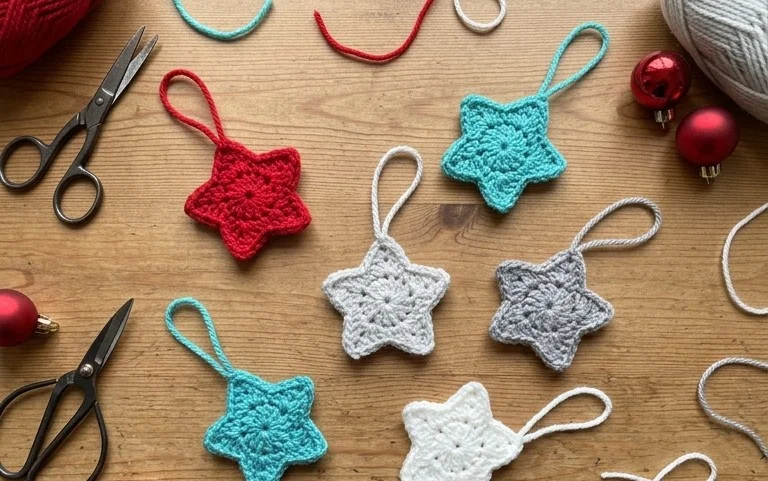
A small crocheted star has five soft points and a gently textured surface that looks lovely on a tree, gift wrap, or a bedroom shelf. This Little Star Crochet Pattern makes a satisfying project for beginners who want to practice working stitches into a ring and shaping points without committing to a large piece. Gift makers can finish one in a short sitting, then add a loop for hanging or sew it onto a handmade card. The pattern uses basic crochet stitches and simple shaping, so you can focus on keeping the points even. You’ll also find guidance on yarn choices, finishing, and ways to adjust the star’s size for different uses.
Why You’ll Love This Pattern
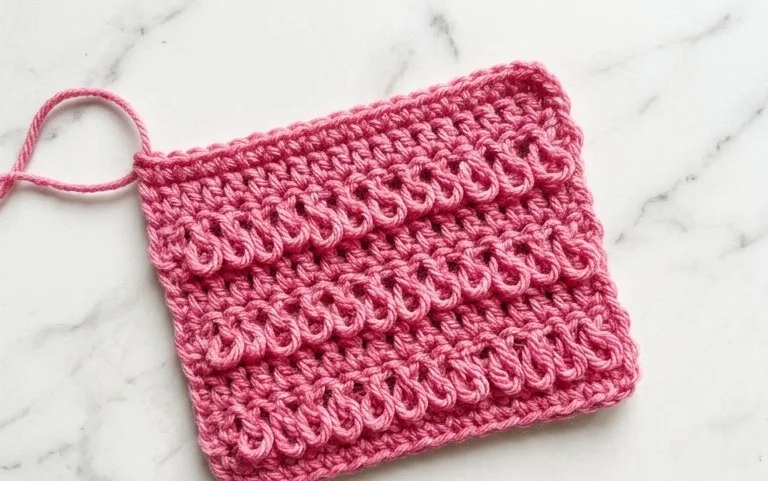
A cotton dishcloth made in single crochet has a firm, textured fabric that is useful for wiping counters and washing dishes. This straightforward pattern uses the same stitch across every row, so you can focus on keeping your edges even rather than learning a complicated repeat. It takes little yarn, works well with leftover cotton, and makes a practical handmade gift.
At about 6 by 5½ inches, the finished cloth is a handy size for everyday kitchen jobs. You can also make a matching set by using different colors while keeping the same stitch and row count.
The rows were easy to keep track of, and the cotton made a sturdy little cloth. I finished one in an evening.
— Mia, home crocheter
Pattern Overview & Skill Level
- Skill Level: Beginner. You need to know how to chain and single crochet.
- Approximate Time: 1–2 hours, depending on your pace and how often you stop to check your row count.
- Construction: Worked flat in rows from the bottom edge upward. The cloth is a simple rectangle, with no seams or shaping.
- Finished Dimensions & Sizing: About 6 inches wide by 5½ inches tall after washing and drying flat. Measurements can vary with your tension.
Materials & Supplies Needed
- Yarn: About 45 yards of worsted-weight (#4) 100% cotton yarn. One solid color makes the stitch texture easy to see; scraps can be used if you have enough for the full cloth.
- Hook Size: 4.0 mm / G-6. Check the fabric as you work. A smaller hook makes a denser cloth; a larger hook makes it looser and may increase the finished size.
- Notions: Tapestry needle for the starting and finishing tails, scissors, and a ruler or tape measure.
- Substitutions: Use another absorbent cotton yarn of similar thickness for a comparable result. Cotton-linen blends are also suitable, though they may feel less soft. Avoid acrylic for a dishcloth intended to absorb water. A different yarn weight changes the finished dimensions and may require more or less yardage.
Stitch Guide & Abbreviations (US Terms)
- ch: Chain. Yarn over and pull through the loop on the hook.
- sc: Single crochet. Insert the hook into the stitch, yarn over and pull up a loop, then yarn over and pull through both loops.
- st(s): Stitch(es).
- rep: Repeat.
- yo: Yarn over.
The turning chain at the start of each row does not count as a stitch. Make the first single crochet in the first stitch of the row, not in the turning chain. This keeps the rectangle edges straight.
Step-by-Step Pattern Instructions
Dishcloth
- Foundation: With the 4.0 mm hook, ch 25. The extra chain gives enough height to turn and begin the first row. (24 foundation chains to work into)
- Row 1: Sc in the second ch from the hook and in each ch across. Ch 1, turn. (24 sts)
- Rows 2–24: Sc in each st across. Ch 1, turn. Repeat for 23 rows, maintaining 24 stitches in every row. (24 sts per row)
- Finish: After Row 24, fasten off, leaving a tail of about 6 inches. Pull the tail through the final loop. Thread it onto a tapestry needle and weave it through the stitches on the wrong side, changing direction once so the end is secure. Weave in the starting tail in the same way.
- Check the shape: Lay the cloth flat and measure it. If it curls, gently smooth it with your hands and wash it according to the yarn label. Cotton often relaxes after washing.
For a neat edge, work the final stitch of each row into the last actual single crochet, not into the turning chain. If a row has 23 or 25 stitches, undo it and recount before continuing; small edge errors can make the rectangle slant.
Care & Washing Instructions
- For 100% cotton, machine wash with like colors in warm water, up to 40°C, unless the yarn label recommends a cooler wash.
- Dry flat or tumble dry on low if the yarn label allows it; reshape the rectangle while damp.
- Block by smoothing the damp cloth to its approximate 6 by 5½-inch dimensions and letting it dry flat. Follow the yarn label if you use a blend.
Pro Tips & Common Mistakes to Avoid
- Keep your tension even, especially on the foundation chain. If that edge is much tighter than the rows, use a larger hook just for the chain or make each chain a little looser.
- Count the stitches at the end of every row until the edges look consistent. A removable stitch marker in the first stitch can help you spot where the next row begins.
- Weave in yarn tails on the wrong side, passing the needle through several stitches and changing direction before trimming. Do not pull so tightly that the cloth puckers.
- To make a wider or taller cloth, add chains in an even number for width and work additional rows for height. A larger cloth uses more yarn; allow extra yardage rather than relying on the 45-yard estimate.
Frequently Asked Questions
Can I use a different cotton yarn?
Yes. Choose a yarn close to worsted weight and check that its label supports regular washing. A thinner yarn makes a smaller, lighter cloth; a thicker yarn makes a larger, heavier one and may need a bigger hook.
How can I make the dishcloth larger or smaller?
Change the foundation chain to adjust the width, then add or remove rows to adjust the height. Each foundation chain after the turning chain becomes a stitch in Row 1, so keep track of the stitch count and use the cloth’s measurements as your guide.
Is this pattern suitable for a first crochet project?
Yes, if you can make a chain and single crochet. The repeated rows give you practice with stitch placement and turning. Count 24 stitches on each row so the sides stay straight.
May I sell dishcloths made from this pattern?
Check the designer’s terms before selling finished items, and follow any credit or sales conditions they specify. If you sell the cloth, describe the fiber accurately and include the care instructions for the yarn used.
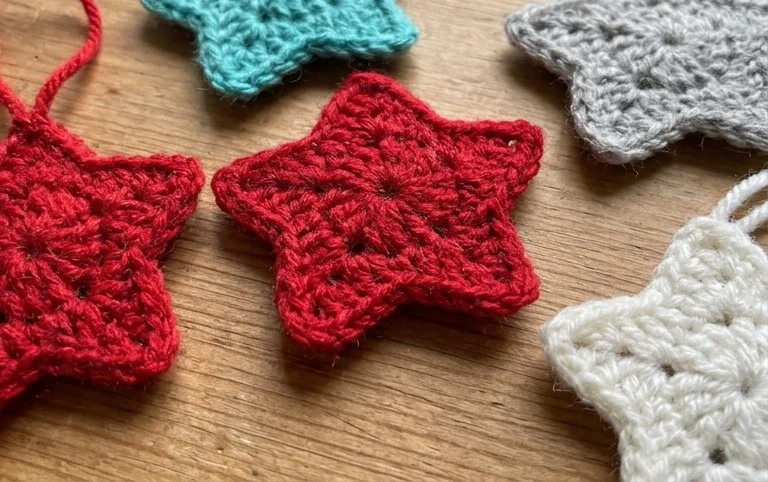
Your finished star is a small, handmade detail that can brighten a gift, hang from a branch, or add a soft touch to a shelf. Try making the next one in a different color, or use a finer yarn and smaller hook for a more delicate version. If you make one, share a photo on Pinterest or your favorite social media platform; seeing different colors and finishes is part of the fun. You can also explore more free crochet patterns on the blog for another quick project to keep your hook moving.